By Capital Watch Media
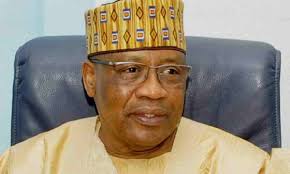
Former Nigerian military president, General Ibrahim Babangida, has justified the spending of the $12.4bn oil windfall during his administration, attributing the nation’s economic struggles to what he described as widespread “profligacy” and “conspicuous consumption.”
Babangida made these remarks in his recently launched autobiography, ‘A Journey of Service,’ presented on 20 February 2025.
He argued that Nigeria failed to fully capitalise on the oil boom years due to unchecked spending and poor economic planning.
“What I have done is not unusual in this country. Somebody did it before me, but I won’t mention names,” Babangida stated.
“We undertook the construction of various ports and other projects, including bridges.”
He maintained that the $12.4bn windfall, earned between 1988 and 1994, was used for developmental projects.
“That money could have gone into the Federation Account. Yes, but whatever foreign exchange we earned, we monetised it, and those we monetised were what the state and local governments were getting. And if all we could spend between 1988 and 1994 was $12.4bn, that is very good,” he added.
The 400-page autobiography addresses the economic impact of Nigeria’s oil wealth, noting that it shaped government spending and contributed to public corruption. In chapter seven, titled ‘Reforming the Economy: Privatisation, IMF, SAP, and Other Matters,’ Babangida discussed the challenges of managing oil revenue.
He criticised policies like the Indigenisation Decree of 1972, suggesting they created wealth for a few influential individuals while neglecting non-oil sectors.
Babangida also pointed to economic issues such as balance of payment crises and an over-valued naira exchange rate.
“The heady days of our nation’s oil boom were overshadowed by accusations of corruption,” Babangida wrote.
He noted that dissatisfaction over these issues led to unrest within the military ranks.
Babangida accused previous administrations of lacking the political will and vision to address Nigeria’s underdevelopment.
“Funds were borrowed heavily from outside and expended not substantially on profitable ventures, but more on conspicuous consumption and prestigious projects,” he stated.
He noted that public sector expenditure expanded without attention to sustainability, leading to falling real production outside the oil sector and increasing import dependency.
The economic instability prompted Babangida’s declaration of a National Economic Emergency on 1 October 1985.
In response to the crisis, his administration introduced a Structural Adjustment Programme, SAP, to restructure the economy.
The programme aimed to correct the naira’s overvaluation and prioritise local production and agriculture.
Despite criticism of the SAP’s social impact, Babangida defended the policies, arguing they were necessary to restore productive capacity.
“Reducing subsidies, adjusting exchange rates, and reining in public spending were the only ways to tackle the structural imbalances,” he wrote.
The Okigbo Panel report later alleged that $12.2bn of the oil windfall was spent on non-regenerative projects.
Babangida responded by asserting that the funds were used to maintain ongoing national projects.
“I didn’t start Ajaokuta, for example, but by the time I took over, $4bn had been sunk in.
Having invested so much, I thought it would be unfair to allow the whole thing to waste away,” Babangida explained.
He dismissed allegations of mismanagement, claiming records documented the spending.
“Pius (Okigbo) did not say somebody stole that money,” Babangida noted.
Babangida concluded that his government’s economic decisions were aimed at long-term development.
“Once you run a government, you don’t put money in the bank. You invest in national projects,” he stated.