By Capital Watch Media
State governors have intensified efforts to prevent the direct disbursement of federal allocations to local government councils, lobbying President Bola Tinubu to delay implementing the Supreme Court’s ruling on local government autonomy.
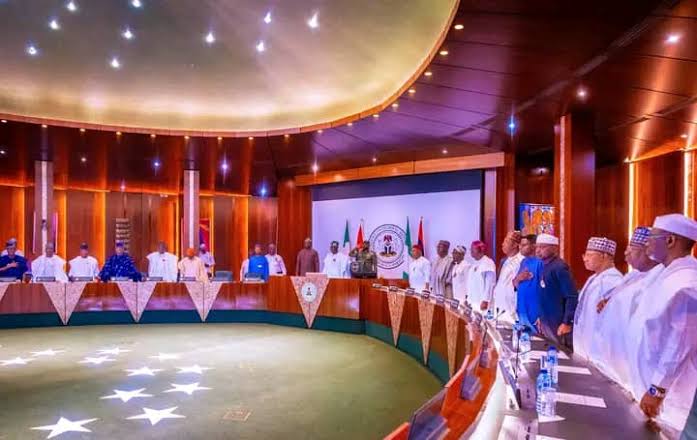
During a meeting at the Presidential Villa last Tuesday, several governors expressed their opposition to the plan, citing concerns over multi-billion-dollar debts allegedly incurred by local governments.
The meeting, which followed an Iftar dinner with the President, lasted several hours.
A senior government official privy to the discussions said, “The governors met with the President to seek a resolution. They are pushing back against routing local government funds through the Central Bank of Nigeria (CBN).”
According to sources, the Federal Government insists that all local government areas should have accounts with the CBN to facilitate direct payments.
However, governors argue that such an arrangement would leave them without control over these funds.
One official explained, “If the allocations go through the CBN, governors believe it would still be under federal control. They prefer that the funds be deposited in commercial banks instead.”
The controversy stems from the Supreme Court’s July 2024 ruling, which affirmed the fiscal independence of local governments and mandated direct allocation payments, bypassing state governments.
The ruling also stated that only democratically elected local government officials could access these funds.
Following the judgment, the CBN began auditing local government accounts and profiling signatories.
In February, it announced the opening of dedicated accounts for local government councils to implement the ruling.
Despite this, direct payments have yet to begin.
The delay has been attributed to resistance from state governors and logistical hurdles. Officials say that governors are citing local government debts as a reason for slowing the process.
Mohammed Abubakar, Secretary-General of the Association of Local Governments of Nigeria, ALGON, acknowledged that financial complications remain a challenge.
“Governors argue that there are outstanding liabilities in the name of local governments. This issue needs to be properly addressed,” he said.
Abubakar also warned that local government funds could be at risk.
“If care is not taken, these funds could be redirected to settle debts without local governments even knowing when the debts were incurred,” he added.
President Tinubu has attempted to ease tensions, calling for cooperation between federal, state, and local authorities.
During a meeting with state governors in January, he said, “Nobody wants to take the local governments away from you. We need collaboration to drive grassroots development.”
However, indications suggest that the Nigerian Governors’ Forum (NGF) is pushing to delay the implementation further.
Some governors have reportedly pressured the CBN to reconsider opening local government accounts.
Meanwhile, the National Union of Local Government Employees has accused the CBN of stalling the process by withholding approvals for certain councils, allegedly due to incomplete financial audits.
Concerns have also been raised about potential legal complications. ALGON officials warn that court orders obtained by creditors could lead to funds being seized once they enter CBN accounts.
“The CBN is dealing with multiple court cases from consultants claiming money from local governments. If these funds reach the CBN, there is a real risk that creditors will move to seize them,” Abubakar explained.
The uncertainty has left many local government chairmen uncertain about their next steps.
According to ALGON, some are awaiting further guidance on how to proceed with CBN engagements.
Abubakar urged the Federal Government to ensure transparency in the process.
“There is a need for clear guidelines on how local government funds will be accessed. The chairmen need to know which department in the CBN to approach,” he said.
He also called for broader consultations with key stakeholders, including ALGON, the Nigeria Union of Local Government Employees, and financial experts, to ensure a smooth transition to financial autonomy.
Legal experts have suggested that the Attorney-General’s office should take the lead in coordinating discussions to avoid further delays.
“The Supreme Court’s ruling is clear. What is needed now is proper implementation, with input from all relevant bodies,” said a senior lawyer familiar with the case.
Some observers warn that prolonged delays could undermine local governance, as councils continue to operate without direct access to their constitutionally allocated funds.
The Federal Government’s committee on local government autonomy, led by the Secretary to the Government of the Federation, George Akume, is expected to submit recommendations soon on the next steps.
As tensions persist, stakeholders await the outcome of negotiations between the presidency, the CBN, and state governors, which will determine the fate of local government financial autonomy in Nigeria.