
Most Widely Read Newspaper
Midterm review: APC fights back as Labour counters Tinubu’s scorecard
30th May 2025

Okechukwu Nnodim, Justice Okamgba, Adebayo Folorunsho-Francis, James Abraham, Haruna Usman, Uche Okere, Godwin Isenyo, Samuel Ese, Salisu Kabuga, John Charles, Patrick Odey, Umar Sani and Tunde Oyekola
Kindly share this story:
https://googleads.g.doubleclick.net/pagead/ads?gdpr=0&us_privacy=1—&gpp_sid=-1&client=ca-pub-7167863529667065&output=html&h=360&slotname=3034130320&adk=628217429&adf=1534306958&pi=t.ma~as.3034130320&w=360&abgtt=6&lmt=1748599626&rafmt=1&format=360×360&url=https%3A%2F%2Fpunchng.com%2Fmidterm-review-apc-fights-back-as-labour-counters-tinubus-scorecard%2F&fwr=1&fwrattr=true&rpe=1&resp_fmts=3&sfro=1&wgl=1&uach=WyJBbmRyb2lkIiwiOC4xLjAiLCIiLCJJbmZpbml4IFg2MjRCIiwiMTM2LjAuNzEwMy4xMjUiLG51bGwsMSxudWxsLCIiLFtbIkNocm9taXVtIiwiMTM2LjAuNzEwMy4xMjUiXSxbIkdvb2dsZSBDaHJvbWUiLCIxMzYuMC43MTAzLjEyNSJdLFsiTm90LkEvQnJhbmQiLCI5OS4wLjAuMCJdXSwwXQ..&dt=1748601035120&bpp=93&bdt=2125&idt=93&shv=r20250528&mjsv=m202505220101&ptt=9&saldr=aa&abxe=1&cookie=ID%3Defa83e6acfb97dad%3AT%3D1741000389%3ART%3D1748430874%3AS%3DALNI_MbPQEtXWsmkk77e5YvuI4peaCwokw&gpic=UID%3D00000ffa0e03c3ef%3AT%3D1741000389%3ART%3D1748430874%3AS%3DALNI_MZZHtLpNyV7h1OEYJ8un4iqaeoUtg&eo_id_str=ID%3D92d50e54bf02bc81%3AT%3D1742294073%3ART%3D1748430874%3AS%3DAA-AfjbHHK4or-rve_vTkTQnhd2z&prev_fmts=0x0&nras=1&correlator=914505387301&frm=20&pv=1&u_tz=60&u_his=10&u_h=750&u_w=360&u_ah=750&u_aw=360&u_cd=24&u_sd=2&dmc=2&adx=0&ady=1021&biw=360&bih=610&scr_x=0&scr_y=0&eid=31092113%2C31092712%2C95333411%2C95353386%2C95360391%2C95361623%2C95362174&oid=2&pvsid=6040838638610623&tmod=67452775&uas=0&nvt=1&ref=https%3A%2F%2Fpunchng.com%2F&fc=1920&brdim=0%2C0%2C0%2C0%2C360%2C0%2C360%2C610%2C360%2C610&vis=1&rsz=%7C%7CeEbr%7C&abl=CS&pfx=0&fu=128&bc=31&bz=1&td=1&tdf=2&psd=W251bGwsbnVsbCxudWxsLDNd&nt=1&pgls=CAEaAzYuOA..&ifi=2&uci=a!2&btvi=1&fsb=1&dtd=1549
Organised Labour on Thursday delivered an unflattering assessment of President Bola Tinubu’s two years in office, saying his reforms and policies brought nothing but pain and suffering to Nigerians.
The labour movement countered Tinubu’s claims that the worst days are over, pointing out that his economic reforms have plunged over 150 million Nigerians into multidimensional poverty.
In a statement, the Nigeria Labour Congress President, Joe Ajaero, submitted that far from renewing hope, his government has merely recycled the same failed neoliberal experiments of the past.
However, the All Progressives Congress pushed back against Tinubu’s critics, accusing the NLC of misrepresenting the reality.
Responding to the criticisms against the President, the APC National Vice Chairman (South-East), Dr. Ijeoma Arodiogbu, said the NLC’s evaluation lacked depth and objectivity.
“Their statement was sponsored. The NLC failed to engage with the real issues and instead chose to grandstand,” Arodiogbu said.
“It’s disappointing to see a professional body making comments that sound more like what you’d hear in a marketplace. They ought to consult economists and policy experts before making such superficial remarks,” he added.
Speaking on Tinubu’s midterm record, Arodiogbu commended the President’s performance.
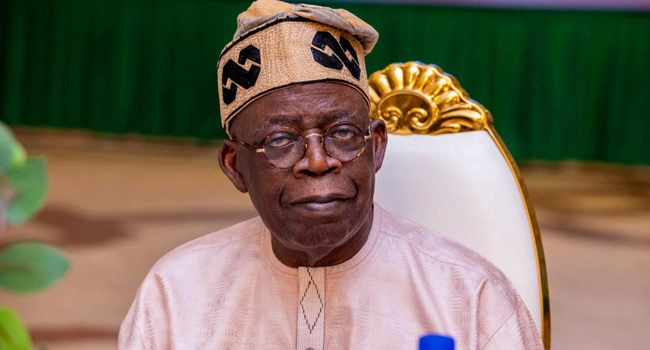
In a national broadcast to commemorate his second anniversary on Thursday, Tinubu touted the benefits of his reforms, saying, “We are on course to building a greater, more economically stable nation.”
He stated that his administration is on course to making life better for Nigerians.
Tinubu acknowledged the pains his reforms have unleashed, adding that he does not take the patience of citizens for granted.
“Today, I proudly affirm that our economic reforms are working. We are on course to building a greater, more economically stable nation. Under our Renewed Hope Agenda, our administration pledged to tackle economic instability, improve security nationwide, reduce corruption, reform governance, and lift our people out of poverty.’’
But Ajaero dismissed Tinubu’s assertions, stating that the government’s failure to move the nation forward had only proved once again that ‘’you cannot cure a patient by prescribing the poison that made him sick in the first place.’’
He said, ‘’When President Bola Tinubu took office on May 29, 2023, he promised a new dawn—bold economic reforms that would rescue Nigeria from fiscal instability and set it on a path to prosperity.
But two years later, the only thing bolder than his rhetoric is the magnitude of suffering and hardship his policies have inflicted on workers and ordinary Nigerians.
“Far from renewing hope, his administration has recycled the same failed neoliberal experiments of the past, proving once again that you cannot cure a patient by prescribing the poison that made them sick in the first place.’’
The labour leader recalled how the sudden removal of the petrol subsidy sent shockwaves through an already fragile economy, causing fuel prices to skyrocket from N187 to over N600 per litre overnight.
Tinubu did not mention in his speech how much the country has saved from fuel subsidy removal, but he did indicate that net external reserves grew from $4 billion in 2023 to over $23 billion by the end of 2024.
While the government argued the move would free up public funds for development and reduce economic distortions, the NLC noted that Nigerians have seen no visible gains, only skyrocketing costs, business closures, and growing hunger.
“Instead of reinvestment, Nigerians got inflation so vicious that families now skip meals, businesses shutter daily, and transport costs consume the little that remains of workers’ wages,” the congress said.
The second pillar of Tinubu’s reforms, the unification of Nigeria’s multiple exchange rates, sought to enhance transparency and attract foreign investment. But the NLC said the policy has had a devastating impact on local production and consumer prices.
Ajaero stated that it only accelerated the naira’s collapse and imported inflation into the domestic economy, making everyday goods unaffordable.
“The naira, left to the so-called ‘market forces,’ has collapsed in value, turning Nigeria into a bargain basement for neighbouring countries while local industries suffocate under the weight of imported inflation,” Ajaero said.
What makes this pain even more frustrating, Ajaero observed, is that none of it is new, recalling the bitter pill and pains of past policies rammed down the nation’s throat by the International Monetary Fund.
He queried, ‘’We have seen this script before—subsidy removals, devaluations, and IMF-approved austerity—each time sold as the bitter pill Nigeria must swallow for a brighter future. But when has it ever worked?
“The same policies under past administrations only widened inequality, enriched a few, and left the majority poorer. Tinubu’s version is no different, except the suffering is deeper, the anger louder, and the government’s response more brutal.’’
He referenced the hyperinflation in the country, which he said had obliterated the workers’ wages.
Despite the optimism conveyed in the presidential broadcast, the NLC insists that macroeconomic statistics are cold comfort for citizens struggling to survive daily.
The union noted that economic performance is measured by how people feel, not by PowerPoint slides and selective data. “If this government truly wants to renew hope, it must abandon these cruel experiments and put Nigerians, not foreign creditors, at the centre of its policies.”
The Assistant General Secretary of the NLC, Chris Onyeka, told The PUNCH that the economic reforms seem like a deliberate imposition of pain on the poor in the service of foreign financial institutions and local elites.
“None of these policies are new. We have seen them under previous administrations. Each time sold as the bitter pill for a better tomorrow. But when has it ever worked?”
Tinubu introduced several policies to alleviate the impact of the fuel subsidy removal, such as the Presidential Compressed Natural Gas program to reduce dependence on petrol, lower transportation costs, and provide cleaner energy alternatives, helping to mitigate the impact of higher fuel prices.
The government implemented palliative measures such as direct cash transfers and food distribution programs aimed at cushioning vulnerable Nigerians from the immediate inflationary pressures caused by the sharp rise in fuel prices.
The union acknowledged the CNG intervention but described it as grossly inadequate given the scale of infrastructural deficits and transportation chaos.
“The only thing we single out is the provision of CNG buses for the use of Nigerian workers across the nation by the federal government to ease transportation, which remains inadequate and hampered by serious gas infrastructural deficits,” it said.