By Capital Watch Media
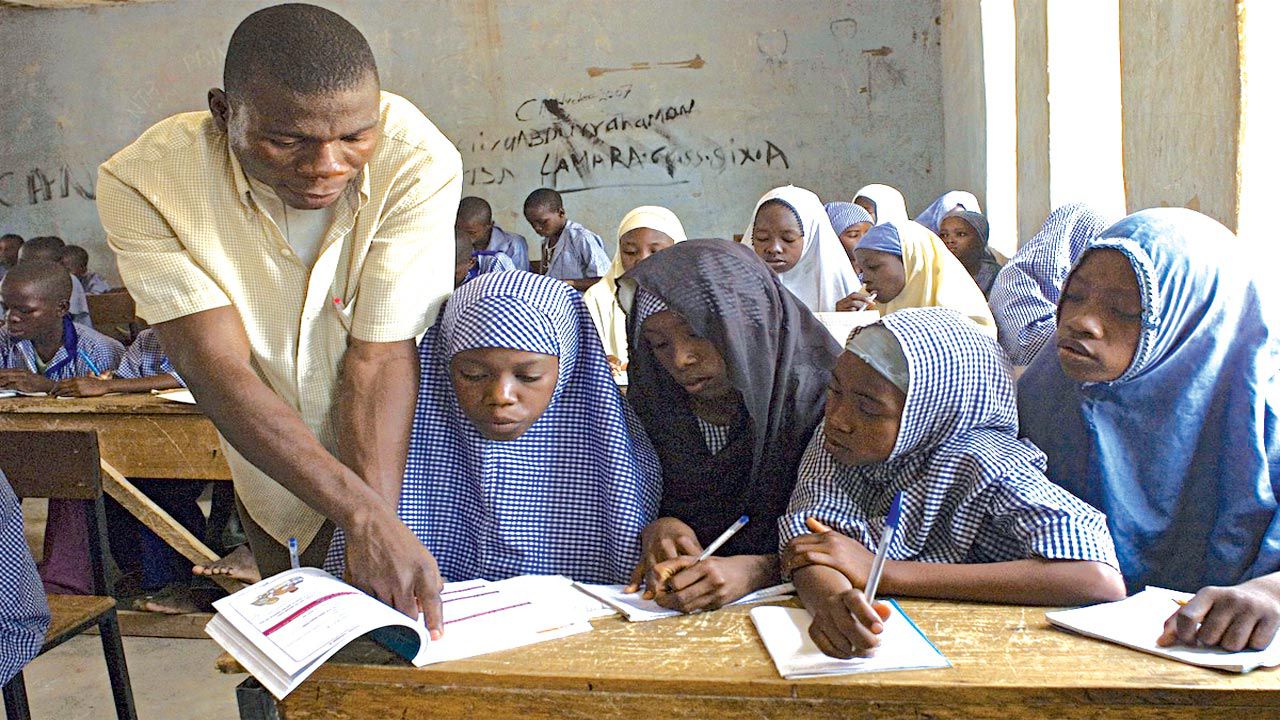
The decision by four northern Nigerian states — Bauchi, Katsina, Kebbi, and Kano — to close schools for five weeks during the Ramadan fasting period has sparked widespread criticism from religious groups, civil society organisations, and parents.
The Christian Association of Nigeria, CAN, condemned the decision, calling it a major setback for education in a region already grappling with high rates of out-of-school children.
Reverend John Joseph Hayab, CAN’s chairman for the 19 northern states and Abuja, described the move as discriminatory and warned of its impact on academic performance.
“If such religious considerations were applied fairly, then schools should also close during the Christian Lenten season,” Hayab stated.
“This would see children out of school for over two months in a year — an untenable situation for an already struggling education sector.”
CAN expressed concern that the prolonged school closures would disadvantage students preparing for critical examinations like the West African Senior School Certificate Examination, WASSCE, and the Unified Tertiary Matriculation Examination, UTME.
Citing data from the National Bureau of Statistics, the association highlighted the already dire educational situation in the affected states, noting that Bauchi, Kebbi, Katsina, and Kano have some of Nigeria’s highest rates of out-of-school children — 54%, 45%, 38%, and 35% respectively.
“Shutting schools for religious reasons will only exacerbate the education crisis and widen the gap between northern and southern states,” Hayab added.
The Catholic Bishops Conference of Nigeria, CBCN, also criticised the policy, calling it a violation of Nigeria’s secular principles.
In a statement signed by CBCN President Archbishop Lucius Iwejuru Ugorji and Secretary Bishop Donatus Ogun, the bishops argued that the closures infringe on the constitutional guarantee of religious neutrality and the fundamental right to education.
“The Nigerian state is secular, and this secularity must guide all aspects of our national life,” the CBCN statement read.
“This policy undermines the educational rights of students of all faiths and disrupts the school calendar.”
Parents have expressed frustration over the decision, calling it ill-timed and detrimental to students’ academic progress.
Alhaji Haruna Danjuma, National President of the Parent-Teacher Association of Nigeria, PTAN, described the move as “shocking and unwise.”
“Our children are preparing for major national exams. How can they compete fairly when their peers in other states are still in school?” Danjuma questioned.
He emphasised that national examination bodies would not adjust their schedules for any reason, including Ramadan fasting.
“This places students in these states at a severe disadvantage,” he warned.
The Impactive Centre for Accountability, Democracy and Rights, ICADAR, a civil society organisation, echoed these concerns, warning that the closures would lead to a significant loss of learning time and further politicise religious practices.
“Fasting is a significant practice for Muslims, but it becomes obligatory only after puberty,” said Bello Ishaq, ICADAR’s Executive Director.
“Most primary school children do not fast, so there is no justification for closing schools.”
He added that secondary school students who choose to fast are capable of balancing their academic responsibilities with their spiritual observances, as seen in other Muslim-majority countries.
CAN also questioned why predominantly Muslim nations like Saudi Arabia and the United Arab Emirates keep schools open during Ramadan while northern Nigerian states opt for closures.
“As peace-loving people, we urge our leaders to reconsider this decision and explore alternatives like adjusting school hours instead of completely shutting down schools,” Hayab suggested.
The association called on northern governors to prioritise education and avoid policies that could further damage the region’s reputation for educational attainment.
Hayab urged well-meaning Nigerians to intervene, while calling on CAN members to remain calm and law-abiding.
“We must balance education and religious observances to secure a better future for our children,” he said.
The CBCN also referenced international human rights frameworks, noting that the Universal Declaration of Human Rights and the International Covenant on Economic, Social and Cultural Rights affirm education as a fundamental right.
With mounting criticism from multiple quarters, pressure is building on the governments of Bauchi, Katsina, Kebbi, and Kano to reconsider their stance on school closures.
As the debate continues, students’ futures hang in the balance.